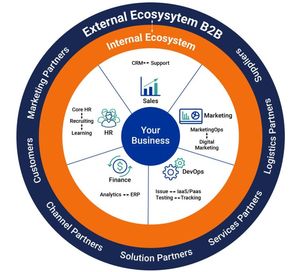
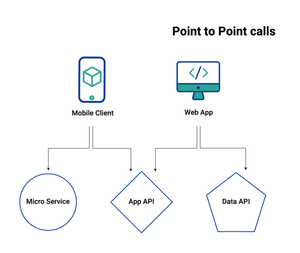
ContributionsMost RecentMost LikesSolutionsRe: Future of APIs? Generative AI to help us write API documentation?!🤔 Future of APIs? I'm curious what the community thinks will be the most likely future of APIs will be. Will it be all asynchronous APIs? GraphQL APIs? Will there be a place for REST APIs? What other things did I miss? Re: Thoughts on Composable Architecture? Hi Chris, Thanks for sharing your insights. Yes we are looking at further leveraging replaceability with more CI/CD functionality for our API management solution. We have some basic functionality already like our public APIs for APIM to retire, deprecate, publish, unpublish APIs at scale. You can see more of it here:https://docs.snaplogic.com/public-apis/apis-apim.html Also stay tuned for more product releases this year regarding CI/CD with APIM. How would you use Generative AI for API management? With the launch of SnapLogic's Gen AI builder, I'm curious how you would use Generative AI to help you with API management? Some early thoughts would be to use Generative AI for : Automatic security policy provisioning Automatic API documentation generation Do you guys agree or have additional use cases?🤔 What's wrong with this API architecture? Pros: Simple & Fast API calls But what could go wrong when you an API architecture like this? Let me know below! Re: Postman Collection for API Management Functionality Great article David. I liked your IoT example, where the "signal" to control the stepper motor of a security camera is an API. Thoughts on Composable Architecture? I'm wondering if you any of you have heard about the Composable Architecture methodology? What are your thoughts on it? Figure 1. Composable Architecture Composable architecture refers to a design approach where software systems are developed by combining independent and interchangeable components or services. The key aspects of a composable architecture include: Modularity - The system is broken down into discrete modules or components that can be developed, deployed and scaled independently. Loose coupling - The interaction between components is well-defined and not tightly coupled. Components have minimal interdependencies. Interoperability - Components conform to shared interface definitions and protocols to communicate and interact with each other. Replaceability - Components can be easily replaced without affecting the overall architecture. The system is not dependent on a specific component implementation. Automation - assembly and configuration of the system from individual components is automated through definition files/APIs rather than custom coding. Data separation - Components own and manage their own data storage rather than relying on a centralized database. Dynamic binding - Components are discovered and combined at runtime to assemble business capabilities on demand in response to changing requirements. No login needed for API Developer Portal? In the November software release, Enhanced API discovery for external users External users are able to now view the API catalog and API documentation in the developer portal without logging in. This lowers the barrier to API discovery and will allow interested API consumers to view APIs without logging into the developer portal. However, API consumers must login in order to subscribe to APIs in the developer portal. They must also be logged in to be able to create applications (subscribe and combine multiple APIs from the developer portal). Give a like if this post helped you 👍 Do you agree with these CIOs? I recently wrote a blog on CIOs and how they view scaling success at their companies. I felt that being data-driven was one of the best answers. I'm seeing a lot of customers using SnapLogic to enable data-driven decision making for their business. What would you say is the best way to scale success at your company? Higher Ed Customer WINS AWARD: w/ just 2 ppl they were able to migrate to Oracle Cloud in 9 months?! It's amazing how many schools have little IT resources and they are trying to transform their IT infrastructure to meet their students needs. Skidmore College as an example were able to use SnapLogic to migrate their data from legacy on-premise servers to the Oracle Cloud with just 2 people. They won an award for this amazing feat! Are any of you struggling with a cloud migration project? Post about it here. You can read more about Skidmore's Data Integration Award here:https://www.snaplogic.com/blog/skidmore-snaplogic-ventana-awards-digital-leadership